Showing posts with label Famous Swimmers. Show all posts

Monday, 25 July 2016

Franklin and Eleanor Roosevelt and swimming: Val Kill

Franklin R partook in swimming therapy to help ameliorate the effects of his polio. He used to spend time at the Merriman Inn in Warm Springs in Georgia, where he swam in the natural spring water. In 1926 he bought the property and founded a therapy centre, which still exists. FDR died at Warm Springs. 

Meanwhile, at her property at Hyde Park, New York, Eleanor built a pool. It was a favourite family gathering place. There is home 16mm film footage recording the Roosevelts and friends and guests swimming there. One of the guests was Winston Churchill. 
In the filmed fictionalised account of the royal visit of King George VI and Queen Elizabeth (Hyde Park on Hudson) KGVI (Samuel West) is depicted swimming there with FDR (Bill Murray).


A project is underway to restore the pool. When we visited it was covered by boards (see photos below)


Eleanor Roosevelt at the Val-Kill pool.

Val-Kill pool, Summer 1940. FDR, Missy Le Hand and Eleanor R. From https://fdrlibrary.wordpress.com/tag/val-kill/
Eleanor on the lawn by the Val-Kill pool, Summer 1959. Photo by Keith M. Taylor. From https://fdrlibrary.wordpress.com/tag/val-kill/

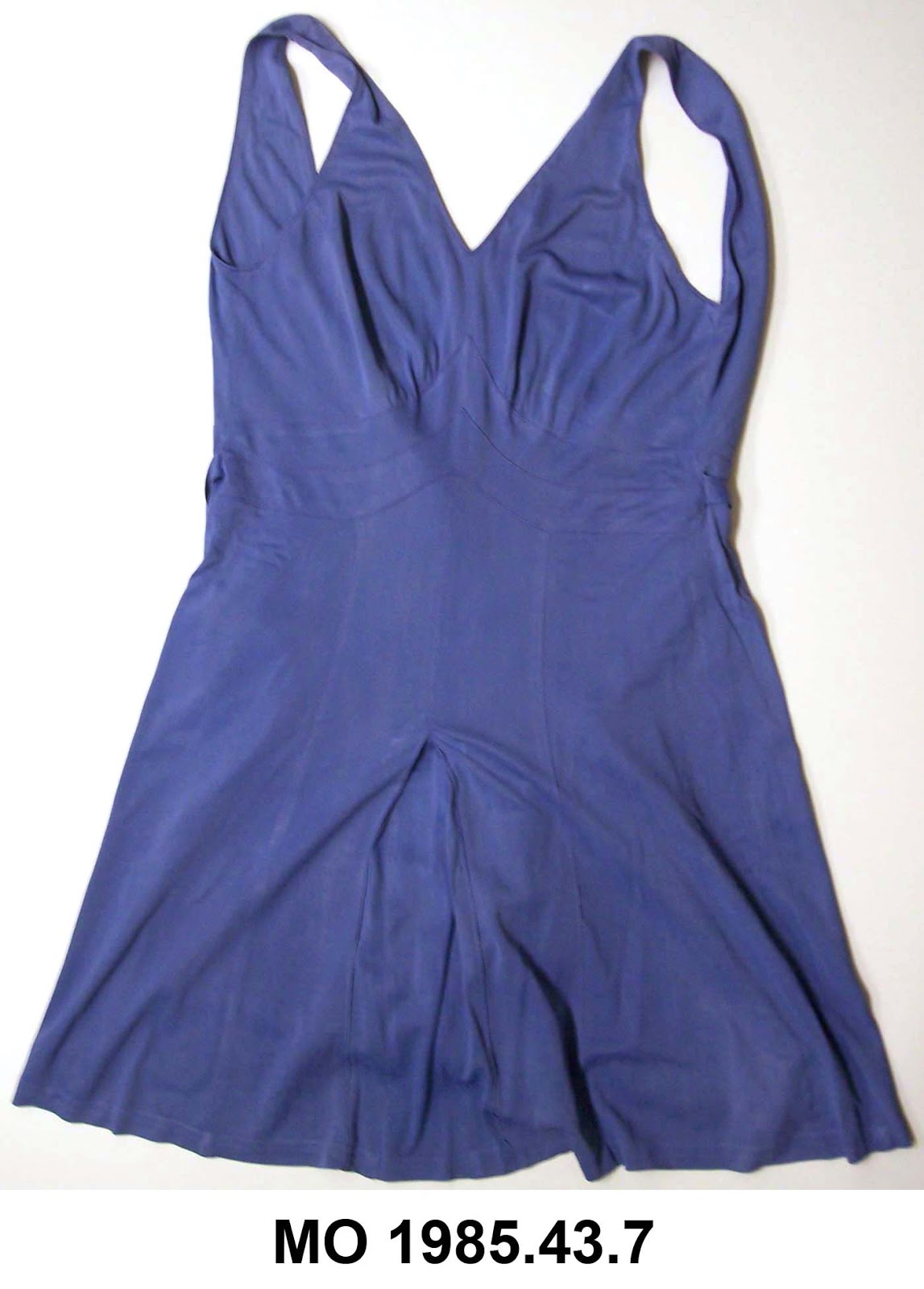
Eleanor's swimsuit. From https://fdrlibrary.wordpress.com/tag/val-kill/


How the pool looked on Sep 15, 2013 when we visited.


Sunday, 29 January 2012

Pool postcard: Municipal pool, Grand Island, Nebraska


Postmarked Sep 13, 1953
 These days Grand Island is home to about 49 000 people. Its most famous son was Henry Fonda. His bio says he was a keen swimmer. Maybe that's Henry in the front there!!!

I collect vintage postcards of swimming pools. I plan to post one a day as far as possible. If you know any of these places, especially the fate of the pool, I'd love to hear from you!

Saturday, 28 May 2011

Famous swimmers: Edward II

Much maligned, and apparently seriously misrepresented in Mel Gibson's movie, Braveheart, Edward II was born at Caernarvon on 25 April 1284 and died, murdered (probably at the behest of his wife and her lover) at Berkeley Castle, Gloucestershire on 21 September 1327.

Edward was entirely unconventional. His long-term lover was a man, Piers Gaveston. His interests were un-kingly, ranging from rowing, estate management (including digging his own ditches), music and swimming.

He liked mixing it with common people, and according to a written source "spent a month swimming and rowing in the Fens in 1315 ....with a great company of common people.”    (Flores Historiarum, ed. H. R. Luard, vol. iii (1890), p. 165.)

Swimming was considered far less than appropriate for a King, and was not a common activity.

I wonder how he learned, and what motivated him?

I first read about Edward II's swimming proclivities in this book, Haunts of the Black Masseur: the swimmer as hero, by Charles Sprawson (1992). I'll do a review and separate blog entry on this book at some time

Sunday, 10 April 2011

Famous Swimmers: Benjamin Franklin

Illustration above: found at Picture book directory of children's illustration. This picture is by David Austin Clar. I am sorry I could not contact you to seek permission to use the image, but am happy to do so if you see this and leave me a message.


 Yes, that Ben Franklin, one of the Founding Fathers of the United States, author and printer, political theorist, politician,  postmaster, scientist, inventor, satirist,  civic activist,  diplomat, anti-slaver.  He formed both the first public lending library in America and the first fire department in Pennsylvania.

He was also an enthusiastic, proselytising swimmer and inventor of a prototype hand paddle / swim-fin.

Franklin is recognised in the International Swimming Hall of Fame. The entry on him includes the following information:

" Benjamin Franklin was a competent swim coach and teacher; he advised on water safety, lifeboat rescue escape from shipwrecks, and the advisability of universal learn-to-swim classes.
One of United States first "ornamental swimmers", on a Thames River excursion in 1726, he swam from Chelsea to Blackfriars (3½ miles) 'performing on the way many feats of activity, both upon and under water, that surprised and pleased those to whom they were novelties'.

Ben wrote about his swim fins:

"When I was a boy, I made two oval palettes, each about 10" long and 6" broad, with a hole for the thumb in order to retain it fast in the palm of my hand.  They much resembled a painter's palette.  In swimming, I pushed the edges of these forward and I struck the water with their flat surfaces as I drew them back.  I remember I swam faster by means of these palettes, but they fatigued my wrists.  I also fitted to the soles of my feet a kind of sandals, but I was not satisfied with them because I observed that the stroke is partly given by the inside of the feet and the ankles, and not entirely with the soles of the feet.

Franklin as swimming teacher:

According to the Hall of Fame entry, Franklin wrote:
  
' 'Tis supposed that every parent would be glad to have their children skilled in swimming, if it might be learnt in a place chosen for its safety and under the eye of a careful person . . .'tis some advantage besides, to be free from the slavish terrors many of those feel who cannot swim, when they are obliged to be on the water even in crossing a ferry.'

"Franklin was also a competent coach and teacher.  He taught his friend Wygate and a friend to swim 'at twice going into the river'  but turned down an offer by Sir William Wyndham to open the first American swim school in England.  He was homesick and returned to Philadelphia where among other things, he proposed that all commonwealth schools should have swimming programs.

Sunday, 1 March 2009

A "new" Australian Olympian

Above: Swimming at 1904 St Louis Olympic Games. A report in yesterday's Sydney Morning Herald says that a 1904 Olympic swimming medallist has erroneously been in the record books as an American for the past 105 years, when, at the time of his success he was Australian. Frank Gailey was from Brisbane, sailed to America in Februray 1904, competed in the St Louis Olympics in August of that year and returned to Australia. He emigrated to the US in 1906 and became a US citizen. He married and lived in Southern California, managing orange groves. Gailey won silver in the 220 yards, 440 annd 880 yards freestyle and bronze in the one mile frestyle. He has been credited with introducing the Australian Crawl to America. I found the picture above on a wonderful site set up by photographers from the St Louis Post-Despatch, publishing photos from their Sunday magazine. The page linked here shows some of the file images from 1904, paired with the most recent from Beijing 2008. Take a peak and look at the contrast in start in 1904 with the amazing capture of Australia's Eamon Sullivan in 2008!

Friday, 20 February 2009

Coogee - Mina Wylie at Wylie's Baths

Sculpture of Mina (Wilhelmina)Wylie, daughter of the founder of Wylie's Baths. Sculptor: Eileen Slarke

Mina Wylie was a woman of firsts. She and friend, Fanny (Sarah Frances) Durack, were the first women to win a silver and gold medal respectively in Olympic swimming, at the 1912 Olympic Games in Stockholm. For the first time at those Olympics, two women's races were held: 100m, and 100m relay. She was also the first woman to receive the Diploma of the Royal Life Saving Society.
In 1971, Mina was inducted into the Swimming Hall of Fame in Fort Lauderdale, Florida.
Wylie was born in Coogee in 1890, and died in 1984.

Photo collage left - Top left: Fanny Durack (l) and Mina Wylie (r). Top right: Mina Wylie. Bottom left: Fanny Durack. Bottom right: Fanny Durack (l) and Mina Wylie (r) in Stockholm
After competing against each other in thw 1910-11 swimming season, Mina and Fanny persuaded swimming officials to let them compete in Stockholm. There were 27 competitors. The pool was built in an inlet of Stockholm Harbour. There were no lane ropes. Fanny's time in the 100m final was 1:22.2 and Mina's was 1:25.4.

Tuesday, 23 December 2008

Swimmers: Andrew Boy Charlton

Last night on TV I saw a terrific program in the series Face Painting With Bill Leak. Leak is best known as a cartoonist, but is also a portrait painter, and in this series he paints six people who are dead. He talks with friends and family of his subjects, and visits locations relevant to their story. Last night's episode was on legendary Australian swimmer, Andrew "Boy" Charlton. You can download the entire episode from here. The finished portrait is simply marvellous. 

 One thing I picked up in the show was that Boy Charlton used to spend his time fishing at Rosedale, on the NSW South Coast...one of my favourite haunts: see my Rosedale and Beyond blog. Charlton came from Manly in Sydney. His nickname "Boy" came from the fact that he was only 14 years old when he first came to prominence by beating visiting champion from Hawaii, Bill Harris (the 100m bronze medallist from the 1920 Paris Olumpics) - and it stayed with him. He was 15 when he took 19 seconds from the world record to win the NSW 880 yards freestyle title in January 1923, and 16 when he beat the mighty Frank Beaurepaire in a 440 match race. Beaurepaire, one of the nation’s heroes - a man who had swum in his first Olympics when Charlton was less than a year old - was then twice his age. (Source: Australian Olympic Committee site) 

 There's a swimming pool in Sydney named after him - called the ABC Pool for short. It was previously known as the Domain Baths and celebrated its 100th birthday this year (not in its current form!). I've shown it on this blog before. Less well known is the Manly Andrew Boy Charlton Swim Centre. 

Here's what the entry in the Australian Dictionary of Biography Online has to say about Charlton:

 "CHARLTON, ANDREW MURRAY (1907-1975), swimmer, was born on 12 August 1907 at North Sydney, only son of Oswald Murray Charlton, bank manager, and his wife Ada Maud, née Moore. 

Known as 'Boy', he was brought up at Manly where he revelled in the surf. Educated at Manly Public School, and at Sydney Grammar School in 1921-22, he entered Hawkesbury Agricultural College in January 1923. 

 On 13 January at the State championships Charlton swam 880 yards freestyle in 11 minutes 5.2 seconds, taking 19 seconds off the world record. In January next year at the State titles held at the Domain baths in Sydney he defeated the great Swedish swimmer Arne Borg over 440 yards freestyle, equalling Borg's world record of 5 minutes 11.8 seconds—the cheering was heard in Martin Place. Next Saturday before a wildly enthusiastic crowd he beat Borg in the 880 yards freestyle event by 15 yards, setting a world mark of 10 minutes 51.8 seconds. 

These feats helped to revive public interest in competitive swimming and, dubbed the 'Manly Flying Fish', he became a popular sporting idol. His trainer was Tom Adrian. 

 At the 1924 Olympic Games in Paris Charlton won the 1500 metres title in 20 minutes 6.6 seconds, setting new Olympic and world records; he was only the third Australian to be awarded a gold medal in swimming. In the same race, 13 minutes 19.6 seconds was a world mark for 1000 metres. He was third in the 400 behind Johnny Weissmuller and Borg, and one of the 4 x 200 relay team which came second. Despite illness, he won other races in Europe, including every event he entered in the Tailteann Games in Ireland, before returning to a tumultuous welcome in Sydney. 

In December he left Hawkesbury Agricultural College without graduating in the diploma course, and worked on Malcolm McKellar's station, Kurrumbede, at Gunnedah. On 8 January 1927 Charlton, now trained by Harry Hay, set a new world record of 10 minutes 32 seconds for 880 yards. He returned to Gunnedah and next year was seriously ill with rheumatic fever. 

In 1932 he set new Australian records for 440 and 880 yards, but was unplaced in the 400 and 1500 metre events at the Los Angeles Olympic Games. In 1934 Charlton moved to Canberra and entered a pharmacy business with a friend and former Manly swimmer John L. Davies; he became captain of Manuka Swimming Club. Representing Canberra at the New South Wales championships in Sydney in January 1935, he beat the French and Australian champions Jean Taris and Noel Ryan in the 880 yards in one of his greatest swims and last race. Next year he took up sheep-raising with J. Hyles on part of Woolowolar, near Tarago. 

On 20 March 1937 at St Mark's Church, Darling Point, Sydney, he married Jessie Muriel Hyles. He then settled on a 12,000-acre (4856 ha) property, Kilrea, at Boro near Goulburn, and became a successful grazier. Extremely shy and modest, 'Boy' shunned publicity. He refused offers to turn professional saying: 'I would never be forgiven by the Australian public … I am not in the sport for what I can get out of it'. He never won an Australian title, but to Australians in the 1920s he was a popular idol and national hero. 

 Survived by his wife, son and daughter, Charlton died suddenly of a heart attack at his Avalon home on 10 December 1975, and was cremated. His estate was valued for probate at $131,850. 

 Charlton's stroke was a four-beat, trudgen crawl, called by some at the time the single trudgen crawl. There was very little leg movement: the wide scissor kick was made horizontally at the end of the left arm drive with the body turned well sideways, then followed two or three vertical kicks. His powerful arms and withering final sprint made him a champion, despite the fact that he rarely trained, preferring to surf instead. 

In 1968 the new Sydney Domain baths were named after him and in 1972 he was honoured by the International Swimming Hall of Fame at Fort Lauderdale, Florida, United States of America." 

Below: Medal ceremony 400m freestyle, Paris Olympics 1924. Boy Charlton (Bronze), Johnny Weissmuller (Gold) and Arne Borg (Silver).

Saturday, 6 September 2008

Australian Olympic swimmers Part Four: Melbourne

Above: A swap card of the swimming stadium at Olympic Park. My Mum went to the swimming here, and recalls seeing Dawn Fraser win one of her races - the 100m I think. Melbourne 22 November - 8 December 1956. 3,314 athletes (2,938 men, 376 women); 72 nations Melbourne was the first time the Olympics had been held in the southern hemisphere (Sydney, 46 years later, was the second), the first time outside Europe or the United States. This caused a problem for northern athletes who had to maintain their peak beyond their usual summer season. The equestrian events were held in Stockholm, due to Australia's strict quarantine laws. The high cost of travelling to the Games meant fewer athletes participated. Melbourne was also the first Games with live television broadcasts and the first in which all the athletes walked together as one in the Closing Ceremony. This change to procedure had been suggested to organisers by an Australian schoolboy, John Ian Wing, and remains a tradition. Television was introduced to Australia in 1956, and was the impetus for many people to buy a set. China pulled out because of the presence of Taiwan, Egypt and Lebanon didn;t attend because of the Suez crisis, and Lichetenstein, the Netherlands, Spain and Switzerland also withdrew, in protest at the Soviet invasion of Hungary. East and West Germany competed as a Combined Germany team. That invasion caused one of the abiding memories of the Melbourne Games, A final round water polo match between the USSR and Hungary had to be abandoned as blood was drawn in the pool. Other "stars of the games" included Australian runners Betty Cuthbert (aged 18) and Shirley Strickland. Cuthbert won the 100 and 200 metres and in the 4 x 100m relay, and Strickland added to her medal tally from 1948 and 1952, winning the 80m hurdles and as a member of the 4 x 100m relay. Soviet gymnast Larissa Latynina won four golds, one silver and one bronze to be the most successful competitor. In the pool, the stand-out performers were Dawn Fraser, who went on to become the ONLY swimmer to win the same event at three Olympic Games - the 100m freestyle. Murray Rose was the first male swimmer since Johnny Weissmuller in 1924 to win two individual freestyle events (400m and 1500 m) Above: Dawn Fraser wins the 100m freestyle. Australian swimming team Gary Chapman (100m freestyle; 4 x 200m freestyle) John Devitt (100m freestyle; 4 x 200 m freestyle) Jon Donohue Murray Garretty (1500m freestyle; 4 x 200m freestyle) Terrence Gathercole (200m breaststroke) Graham Hamilton (4 x 200m freestyle) John Hayres (100m backstroke) Jon Henricks (100m freestyle; 4 x 200m freestyle) John Konrads John Marshall (200m butterfly) John Monckton (100m backstroke) Kevin O'Halloran (400m freestyle; 4 x 200m freestyle) Murray Rose (400m freestyle; 1500m freestyle; 4 x 200m freestyle) David Theile (100m backstroke) Brian Wilkinson (200m butterfly) Gary Winram (400m freestyle; 1500m freestyle) Alva Colquhoun (4 x 100m freestyle) Lorraine Crapp (100m freestyle; 400m freestyle; 4 x 100m freestyle) Jan Deane Dawn Fraser (100m freestyle; 400m freestyle; 4 x 100m freestyle) Maureen Giles-Monckton (100m butterfly) Patricia Huntingford (100m backstroke) Barbara Sargeant (200m breaststroke) Gergaynia Shelley (100m backstroke) Beverley Spargo (100m butterfly) Pam Hutchings (100m backstroke) Faith Leech (100m freestyle; 4 x 100m freestyle) Sandra Morgan (400m freestyle; 4 x 100m freestyle) Margaret Messenger (4 x 100m freestyle) Elizabeth Walker (4 x 100m freestyle) Events, Medallists, Winning and Australian Times Men 100m freestyle: G: Jon Henricks AUS 55.4 S: John Devitt AUS55.8 B: Gary Chapman AUS 56.7 ( left: Jon Henricks, Jon Devitt and Gary Chapman; right Jon Henricks)

400m freestyle: G: Murray Rose AUS 4:27.3 S: Tsuyoshi Yamanaka JPN; B: George Breen USA 4th - Kevin O'Halloran AUS 4:32.9 6th - Gary Winram AUS 4:34.9 1500m freestyle: G: Murray Rose AUS 17:58.9 S: Tsuyoshi Yamanaka JPN B: George Breen USA 4th - Murray Garretty 18:26.5 8th - Gary Winram AUS 19:06.2 (left: Murray Rose being congratulated)

100m backstroke: G: David Theile AUS 1:02.2 S: John Monckton AUS 1:03.2 B: Frank McKinney USA; 5th - John Hayres 1:05.0 200m breaststroke: G: Masaru Furukawa JPN 2:34.7 S: Masahiro Yoshimura B: JPN Charis Yunitschev URS 4th - Terence Gathercole 2:38.7 200m butterfly: G: William Yorzik USA 2:19.3 S: Takashi Ishimoto JPN B: Gyorgy Tompek HUN 5th - John Marshall AUS 2:27.2 7th - Brian Wilkinson AUS 2:29.7 4 x 200m freestyle relay: G: Australia 8:23.6 S: USA B: USSR Women 100m freestyle: G: Dawn Fraser AUS 1:02.0 S: Lorraine Crapp AUS 1:02.3 B: Faith Leech AUS 1:05.1 (right: Fraser, Crapp and Leech)

400m freestyle: G: Lorraine Crapp AUS 4:54.6 S: Dawn Fraser AUS 5:02.5 B: Sylvia Ruuska USA 6th - Sandra Morgan 5:14.3 (left: Dawn Fraser after heat 3 of the 400m)

100m backstroke: G: Judith Grinham GBR 1:12.9 S: Carin Cone USA B: Margaret Edwards GBR 8th - Gergaynia Shelley AUS 1:14.7 200m breaststroke: G: Ursula Happe GER 2:53.1 S: Eva Ezekely HUN B: Eva-Maria ten Elsen GER 100m butterfly: G: Shelley Mann USA 1:11.0 S: Nancy Ramey USA B: Mary Sears USA 5th- Beverley Spargo AUS 1:15.2 4 x 100m freestyle: G: Australia 4:17.1 S: USA B: South Africa

Friday, 22 August 2008

Australian Olympic swimmers Part One: Before World War One

The Olympic Games are over, the anthems played, medals awarded. This and subsequent posts are a small tribute to Australia's Olympic swimmers over the past century. I've been trying to remember when I first became conscious of the Olympic Games. I have no recollection of Rome (1960). I vaguely remember the controversy surrounding Dawn Fraser at Tokyo in 1964, which must have filtered in by radio, as I don't think we had a TV then. The earliest clear recollection of an Olympic Games is of Mexico in 1968. I collected a scrapbook of cuttings from various magazines, and remember the altitude presenting a challenge. Michael Wenden from Australia won gold medals in the 100m and 200m freestyle, and collapsed and sank after the 200m due to breathing difficulties. He had to be pulled from the pool. Wenden also won silver in the 800m free, and bronze in the 4 x 100m relay, with team mates. 1896 Athens 6 April - 15 April (14 nations; 241 male athletes) No Australian swimmers Edwin "Teddy" Flack was the only competitor from an Australian colony. He entered five events, winning medals in three - two athletics and one tennis. Swimming events and winners with winning times. (No women's events) 100m freestyle: G: Alfred Hajós, HUN 1:22.2 S: Efstathios Chorophas, GRE B: Otto Herschmann, AUT 500m freestyle: G: Paul Neumann, AUT 8:12.6 S: Antonios Pepanos, GRE B: Efstathios Chorophas, GRE 1200m freestyle: G: Alfred Hajós, HUN 18:22.2 S: Jean Andreou, GRE B: Efstathios Chorophas, GRE 100m freestyle (sailors): G: Ioannis Malokinis, GRE 2:20.4 S: S. Chapasis, GRE B: Dimitrios Drivas, GRE 1900 Paris 14 May - 28 October (24 nations; 997 athletes - 22 being women) The Paris Olympics had seven men's swimming events, including a 200 meter obstacle swim and underwater swimming. For the obstacle swim, the swimmers had to climb over or under poles and boats. The underwater swim gave one point for each second underwater and two points for each meter swam while underwater. The swimming events were held in the Asnières basin of the River Seine. Below: Georges Seurat: Bathing at Asnières 1883-4 Below: The start of one of the races.

Australian winner: 2 gold Frederick Lane (pictured left) was the only Australian swimmer at the Games. He won gold in 200m freestyle and 200m obstacle race! Lane was the first man to swim 100 yards in less than a minute. He did not receive gold medals, but instead received bronze sculptures of a horse and peasant girl respectively. He was also the favourite for the 100 metre freestyle, but this event was cancelled.

Swimming events, winners and winning times: 200m freestyle: G: Frederick Lane, AUS 2:25.2 S: Zoltan Halmay, HUN B: Karl Ruberl, AUT 1000m freestyle: G: John Jarvis, GBR 13:40.2 S: Otto Wahle, AUT B: Zoltan Halmay, HUN 4000m freestyle: G: John Jarvis, GBR 58:24.0 S: Zoltan Halmay, HUN B: Louis Martin, FRA 200m backstroke: G: Ernst Hoppenberg, GER S: Karl Ruberl, AUT B: Johannes Drost, HOL 200m Team Swimming: G: GER 32 S:FRA B: FRA 200m Obstacle Event: G: Frederick Lane, AUS 2:38.4 S: Otto Wahle, AUT B: Peter Kemp, GBR Underwater Swimming: G: Charles de vendeville, FRA 188.4 S: P Alexandre Six, FRA B: Peder Lykkeberg, DEN St Louis 1904 1 July - 23 November (12 nations; 651 athletes, 6 being women) St Louis nearly ended the Olympic Movement. No women competed. Demeaning events for indigenous athletes from around the world were held. The status of the Olympics fell further. It took the unofficial 1906 Games in Athens, known as the Intercalated Games, to revive interest and faith in the Olympic Movement. The 1906 Games were arranged to mark the 10th anniversary of the first Modern Olympics. It was previously thought that no Australian swimmers took part. Recently it came to light that Frank Gailey, an Australian, had erroneously been recorded as American. (He later did become a US citizen). When he won 3 silver and 1 bronze medal in St Louis he was Australian. See link to separate post about this here. The St. Louis Olympics had 9 swimming events for men. This was the first and only time that the Olympic swimmers raced in yards. This was also the first time a USA swimmer earned Olympic swimming medals. Swimming events, winners and winning times: 50 yards freestyle: G: Zoltan Halmay, HUN 28.0 S: Scott Leary, USA B: Charles Daniels, USA 100 yards freestyle: G: Zoltan Halmay HUN 1:02.8 S: Charles Daniels B: Scott Leary USA 220 yards freestyle: G: Charles Daniels USA 2:44.2 S: Francis Gailey AUS B: Emil Rausch GER 440 yards freestly: G: Charles Daniels USA 6:16.2 S: Francis Gailey AUS B: Otto Wahle AUT 880 yards freestyle: G: Emil Rausch GER 13:11.4 S: Francis Gailey AUS B: Geza Kiss HUN 1 mile freestyle: G: Emil Rausch GER 27;18.2 S: Geza Kiss HUN B: Francis Gailey AUS 100 yards backstroke: G: Walter Brack GER 1:16.8 S: Georg Hoffmann GER B: Georg Zacharias GER 440 yards breastroke: G: Georg Zacharias GER 7:23.6 S: Walter Brack GER B: Jamison Handy USA 4 x 50 yards relay: G: USA 2:04.6 S: USA B: USA Plunge for Distance: G: W.E. Dickey USA 19:05 S: Edgar Adams USA B: Leo Goodwin USA 1908 London 27 April - 31 October (22 nations; 2008 athletes, 37 being women) Australia competed with New Zealand under the title Australasia.The 1908 Olympics were originally awarded to Rome, as the IOC President, Baron Pierre de Coubertin, had wished. But in April, 1906, Mount Vesuvius erupted again, leaving a cash-strapped Italy to abruptly cancel its plans to stage the Games.

Athletes marched as teams behind the flags of their nations for the first time. This momentous occasion turned into a political squabble when American flag-bearer Martin Sheridan refused to dip the US flag to King Edward because organisers had failed to fly the Stars and Stripes beside the flags of other competing nations in the main stadium. The Finnish athletes, upset at being under Russian rule, marched without a flag. The Irish also boycotted in protest of Great Britain failing to grant them independence. Australian swimming medallist: 1 silver and 1 bronze: Frank Beaurepaire in 400m freestyle and 1500m freestyle respectively. He was aged 17. Other members of the Australian team were Theodore Tartakover, Edward Cook, Sydney Springfield, Reginald (Snowy) Baker. Snowy Baker represented Australia in 26 different sports and excelled at them all! Frank's Beaurepaire's Olympic story is incredible by today's swimmers' relatively pampered existence! On arrival in London with his trainer, Tommy Horlock, no arrangements had been made to pick them up, so they were forced to live with 16 pounds between them for a month before officials became aware of their plight. Beaurepaire trained in London for three months before the Games. Unable to afford admission to swimming pools, He was forced to train at Highgate Ponds, at temperatures of 10°C. After a 15-mile (24 km) event in the River Thames prior to the Olympics he was numbed by the cold to such an extent that he collapsed and needed to be pulled from the water to avoid drowning. Arriving at the Olympics, the competitors were confronted with a pool dug into the athletics track, with no filtration or chlorination, effectively being a muddy pond.

Right: Frank Beaurepaire Swimming events, winners and winning times. (No women's events) 100m freestyle: G: Charles Daniels USA 1:05.6 S: Zoltan Halmay HUN B: Harald Julin SWE 400m freestyle: G: Henry Taylor GBR 5;36.8 S: Frank Beaurepaire, AUS B: Otto Scheff AUT 1500m freestyle: G: Henry Taylor GBR S: Sydney Battersby GBR B: Frank Beaurepaire AUS 100m backstroke: G: Arno Bieberstein GER 1:24.6 S: Ludwig Dam DEN B: Herbert Haresnape GBR 200m breastroke: G: Frederick Holman GBR 3:09.2 S: William Robinson GBR B: Pontus Hansson SWE 4 x 200m freestyle: G: Great Britain 10:55.6 S: Hungary B: USA 1912 Stockholm 5 May - 22 July (28 nations; 2407 athletes, 48 being women) The Swedes ensured the Games were a stand-alone event (not attached to a fair like in Paris and St Louis) and the schedule was shortened to two months. A 22,000-seat stadium and a new swimming pool were built, and accommodation provided for visiting athletes. These games introduced the use of unofficial electronic timing devices (capable of registering to the tenth of a second) for track and swimming events. Once again Australia and New Zealand competed as Australasia, though this was the last time. New Zealand swimmer Malcolm Champion carried the flag in the Opening Ceremony. The Stockholm Olympics had 7 swimming events for men and, for the first time, two events for women. The women swam a 100 meter freestyle and a 4 x 100 meter freestyle relay. Sarah ‘Fanny’ Durack became the first female swimmer to win Olympic gold. She set a new world record in each round of her event.

Australian swimming team: Les Boardman, Malcolm Champion, Sarah 'Fanny' Durack, Harold Hardwick, Cecil Healy, William Longworth, Frank Schryver, Theodore Tartakover, Wilhelmina Wylie.

Above: Harold Hardwick, William Longworth at the Stockholm Olympics, showing the swimming area.

2 gold : Fanny Durack - 100m freestyle; Leslie Boardman, Malcolm Champion (a New Zealander - Australia and NZ competed as 'Australasia'), Cecil Healy and Harold Hardwick - 4 × 200 metre freestyle relay, won in the unofficial record time of 10 minutes 11.6 seconds. 2 silver: Cecil Healy - 100 metre freestyle; Wilhelmina (Mina) Wylie - 100 metre freestyle. 2 bronze: Harold Hardwick - 400m and 1500m freestyle. Fanny Durack and Mina Wylie were initially refused permission to compete in the Olympics. The New South Wales Ladies Swimming Association later allowed them to go provided they bore their own expenses. Durack set a new world record in the heats of the 100 m freestyle. In the late 1910s, she held every women's swimming world record from 100 m to a mile. Mina's father, H. A. Wylie created and operated Wylies Baths at Coogee and he and her brothers gave exhibitions of 'trick and fancy swimming' at Sydney swimming carnivals. Photo collage below: Top left: Fanny Durack (l) and Mina Wylie (r). Top right: Mina Wylie. Bottom left: Fanny Durack. Bottom right: Fanny Durack (l) and Mina Wylie (r) in Stockholm

Leslie Boardman: Not much known about him. It is hypothesized that he was chosen because he was a team-mate at the Sydney Swimming Club of Harold Hardwick and Cecil Healy. Below: Left Cecil Healy. Right Harold Hardwick Cecil Healy was killed in the First World War at Mont St Quentin, in an attack on a German trench. In Stockholm, Healy entered the 100m event with fellow Australian Bill Longworth and American Duke Kahanamoku. All three qualified for the semi-final, with Kahanamoku clearly the quickest. Healy and Longworth then qualified from the first semifinal, but the three Americans, who were scheduled to qualify in the second semi-final did not, due an error by their team management. However, Healy intervened and assisted in an appeal to allow the Americans to swim another special race in order to qualify for the final. Despite protestation from other delegations, the Americans were allowed a separate race, with Kahanamoku qualifying for the final. In the final, Kahanamoku won easily, by 1.2s, over a bodylength, with Healy in second place. Healy's sportsmanship effectively cost him the gold medal. Healy was a Manly lifesaver and was awarded the Royal Humane Society silver medal for saving numerous lives. Harold Hardwick became a professional boxer. Swimming, boxing, gymnastics, water-polo and lifesaving were Hardwick's main interests (he was a foundation member of the Manly Surf Club), but he also played Rugby Union for New South Wales against a visiting American universities team (1910) and was a member of the Eastern Suburbs premiership team (1913). In 1914 he won the State amateur heavyweight boxing championship. He became the the Department of Education as supervisor of swimming and was responsible for organizing holiday swimming schools throughout the State. In 1938 he directed the schoolchildren's display at Australia's 150th Anniversary Celebrations. He retired as deputy-director of physical education in February 1953. The Harold Hardwick memorial trophy is awarded annually to the winner of the New South Wales 100-metres schoolboys' title. It bears the inscription: 'In memory of a great sportsman, soldier and gentleman'. Swimming events, winners and winning times Men 100m freestyle: G: Duke Kahanamoku USA 1:03.4 S: Cecil Healey AUS B: Kenneth Huszagh USA 400m freestyle: G: George Hodgson CAN 5:24.4 S: John Hatfield GBR B: Harold Hardwick AUS 1500m freestyle: G: George Hodgson CAN 22:00.0 S: John Hatfield GBR B: Harold Hardwick AUS 100m backstroke: G: Harry Hebner USA 1:21.2 S: Otto Fahr GER B: Paul Kellner GER 200m breastroke: G: Walter Bathe GER 3:01.8 S: Wilhelm Lützow GER B: Kurt Malisch GER 400m breastroke: G: Walter bathe GER 6:29.6 S: Thor Henning SWE B: Percy Courtman GBR 4 x 200m freestyle relay: G: Australia 10.11.6 S: USA B: Great Britain Women 100m freestyle: G: Fanny Durack AUS 1.22.2 S: Wilhelmina Wylie AUS B: Jeannie Fletcher GBR 4 x 100m freestyle relay: G: Great Britain 5:52.8 S: Germany B: Austria

Thursday, 21 August 2008

Australian Olympic swimmers Part Two: Between World War One and World War Two

1920 Antwerp 20 April - 12 September
(29 nations; 2626 athletes - 65 women)

World War I postponed the 1916 Games that had been scheduled to be held in Berlin. The 1920 Games were awarded to Antwerp, in part to honour the suffering that had been inflicted on the Belgian people during the war. The Games were built on the themes of peace and harmony. The Opening Ceremony was notable for the introduction of the Olympic flag (designed in 1913) and the Olympic Oath (or Athletes’ Oath).


Below: The swimming pool at Antwerp. Duke Kahanamoku won his second 100m freestyle gold. He is starting in Lane 5.

Frank Beaurepaire swam at his second Olympics, and his sister, Lily Beaurepaire, also swam here, the sole woman participant for Australia, racing in both the 100m and 400m freestyle event, and taking part in the High Diving..

Australian medallists
1 silver:
Frank Beaurepaire, Henry Hay, William Herald, and Ivan Stedman — Men's 4x200m Freestyle Relay
1 bronze: Frank Beaurepaire — Men's 1500m Freestyle

Henry Hay later enjoyed success as a swimming coach, guiding Boy Charlton to Olympic gold.
William Herald faded into anonymity after 1920.
Ivan Stedman: On 13 June 1916 Stedman enlisted in the Australian Imperial Force. He joined the 5th Field Artillery Brigade on the Western Front in August 1917, but was wounded at Passchendaele, Belgium, two months later when a shell burst in his gun-pit. Following a convalescence in England, he rejoined his unit in France in May 1918. For diving into the dark waters of the Hallue River on 23 June and rescuing a British soldier, he received an award from the Royal Humane Society, London. In September Stedman learned that his hero, Healy, had been killed at Mont St Quentin.
Keith Kirkland was also part of the team and had swum in the heats of the relay, but was replaced by Beaurepaire for the final. He did not receive a medal, but would if competing today.

Swimming events, winners, winning and Australian times:
Men
100m freestyle:
G: Duke Kahanamoku USA 1:01.4 S: Pea Kealoha USA B: William Harris USA . 4th - William Herald 1:03.8
400m freestyle: G: Norman Ross USA 5:26.8 S: Ludy Langer USA B: George Vernot CAN
1500m freestyle: G: Norman Ross USA 22.23.2 S: George Vernot CAN B: Frank Beaurepaire AUS 23:04.0
100m backstroke: G: Warren Kealoha USA 1:15.2 S: Raymond Kegeris USA B: Gérard Blitz BEL
200m breastsroke: G: Kakan Malmroth SWE 3:04.4 S: Thor Henning SWE B: Arvo Aaltonen FIN
400m breaststroke: G: Hakan Malmroth SWE 6:31.8 S: Thor Henning SWE B: Arvo Aaltonen FIN
4x 200m freestyle relay: G: USA 10:04.4 S: Australia 10:25.4 B: Great Britain

Women
100m freestyle:
G: Ethelda Bleibtrey USA 1:13.6 S: Irene Guest USA B: Frances Schroth USA
300m freestyle: G: Ethelda Bleibtrey USA 4:34.0 S: Margaret Woodbridge USA B: Frances Schroth USA
4x 100 m freestyle relay: G: USA 5:11.6 S: Great Britain B: Sweden

1924 Paris 4 May - 27 July
( 44 nations; 3089 athletes - 135 women)

The Olympic motto, “Citius, Altius, Fortius” (“Swifter, Higher, Stronger”) was introduced, athletes stayed in a “village” of wooden cabins (a forerunner of the Olympic Village), and the Closing Ceremony ritual of raising three flags, the Olympic flag, the Host Nation’s flag, and the next Host Nation’s flag, was introduced.

Paris 1924 marked the arrival of the Olympic Games as a major international event. Competitors came from 44 nations, the main stadium could accommodate a crowd of 60,000, a swimming pool was especially built for competition, and 625,000 spectators and 1000 journalists attended.
Johnny Weissmuller, who later became the movie Tarzan was the star swimmer, winning three gold medals, plus a bronze medal in water polo.

Below: The pool at Tourelles in the 20th arrondissement built for the Games. Here a water polo match is in progress


Below: Medal ceremony for 400m freestyle L to R Andrew "Boy" Charlton, Australia (Bronze), Johnny Weissmuller, USA (Gold), Arne Borg, Sweden (Silver)


No women represented Australia in any sport.

Andrew ‘Boy’ Charlton, who became the first Australian to win the 1500m freestyle was the Australian swimming star. He beat Swede Arne Borg after Borg had set a new world record in the heats. That mark didn’t last long: in the final, Charlton slashed more than a minute off Borg’s world record to win in 20 minutes, 6.06 seconds.

Charlton also won a bronze medal in the 400m freestyle and a silver medal in the 4x200m freestyle relay, teaming with Frank Beaurepaire, Maurice 'Moss' Christie and Ernest Henry. Due to his busy schedule Charlton only swam the final with Ivan Stedman swimming the heat and semifinal.

The other bronze medal was won by Beaurepaire in the 1500m freestyle. It was his third 1500m bronze, having also placed third in the race in 1908 and 1920. (The only other Australian to win three medals in the 1500m freestyle is Kieren Perkins.) Beaurepaire also was the first Australian to win medals at three different Olympics.

Australian swimming medallists:
1 gold
: Andrew (Boy) Charlton - Men's 1500 m Freestyle
1 silver: Frank Beaurepaire, Boy Charlton, Maurice Christie and Ernest Henry — Men's 4x200 m Freestyle Relay
2 bronze: Boy Charlton - Men's 400 m Freestyle; Frank Beaurepaire — Swimming, Men's 1500 m Freestyle

Also in the team was Ivan Stedman

Swimming events, winners, winning and Australian times:
100m freestyle: G: Johnny Weissmuller USA 59:0 S: Duke Kahanamoku USA B: Sam Kahanamoku USA
400m freestyle: G: Johnny Weissmuller USA 5:04.2 S: Arne Borg SWE B: Andrew Charlton AUS 5:06.6
1500m freestyle: G: Andrew Charlton AUS 20:06.6 S: Arne Borg SWE B: Frank Beaurepaire AUS 21:48.8
100m backstroke: G: Warren Poa Kealoha USA 1:13.2 S: Paul Wyatt USA B: Károly Bartha HUN
200m breaststroke: G: Robert Skelton USA 2:56.6 S: Joseph de Combe BEL B: William Kirschbaum USA
4 x 200m freestyle relay: G: USA 9:53.4 S: Australia 10:02.2 B: Sweden p';

Women
100m freestyle: G: Ethel LAckie USA 1:12.4 S: Mariechen Wehselau USA B: Gertrude Ederle USA
400m freestyle: G: Martha Norelius USA 6:02.2 S: Helen Wainwright USA B: Gertrude Ederle USA
100m backstroke: G: Sybil BAuer USA 1:23.2 S: Phyllis HArding GBR B: Aileen Riggin USA
200m breaststroke: G: Lucy Morton GBR 3:33.2 S: Agnes Geraghty USA B: Gladys Carson GBR
4 x 100m freestyle relay: G: USA 4:58.8 S: Great Britain B: Sweden

1928 Amsterdam 17 May - 12 August
(14 nations; 2883 athletes - 277 women)

These were the first Games in which an Olympic flame burned over the host city for the duration of the competition. It was lit beforehand by an employee of the gasworks company. At the Opening Ceremony, the team from Greece led the Parade of Nations and the host Dutch team marched in last. Greece first, hosts last would become a permanent part of the Olympic protocol.


It was also the first Olympics in which women competed in gymnastics and athletics. Edith Robinson was Australia's first female athletics competitor.

Due to economic difficulties, Australia could only afford to send ten athletes to the Games, as the estimated cost of funding was A$720 per athlete. However, other athletes were allowed to compete on the condition that they secure private or community funding. Eight athletes were funded in this way, including Dunc Gray, who won a bronze medal in cycling.

The Australian swimming team were Tom Boast, Andrew 'Boy' Charlton, Edna Davey, Bonnie Mealing (aka Philomena Johnston - later married name: more here) and Doris Thompson.

Below: Edna Davey with Fanny Durack

Australian medals
Boy Charlton
won 2 silver medals in the 400 and 1500m freestyle events.

Below: The pool at Amsterdam
Events, medallists, winning times and Australian times
Men
100m freestyle:
G: Johnny Weissmuller USA 58.6 S: István Bárány HUN B: Katsuo Takaishi JPN
400m freestyle: G: Alberto Zorilla ARG 5:01.6 S: Andrew Charlton AUS 5:03.6 B: Arne Borg SWE
1500m freestyle: G: Arne Borg SWE 19:51.8 S: Andrew Charlton AUS 20:02.6 B: Clarence Crabbe USA
100m backstroke: G: George Kojac USA 1:08.2 S: Walter Laufer USA B: Paul Wyatt USA
200m breaststroke: G: Yoshiyuki Tsurita JPN 2:48.8 S: Erich Rademacher GER B: Teofilo Yldefonzo PHI
4 x 200m freestyle relay: G: USA 9:36.2 S: Japan B: Canada

Women
100m freestyle:
G: Albina Osipowich USA 1:11.0 S: Eleonor Garatti USA B: Joyce Cooper GBR
400m freestyle: G: Martha Norelious USA 5:42.8 S: Maria-Johanna Braun HOL B: Josephine McKim USA
100m backstroke: G: Maria-Johanna Braun HOL 1:22.0 S: Ellen king GBR B: Joyce Cooper GBR
200m breaststroke: G: Hilde Schrader GER 3:12.6 S: Mietje Baron HOL B: Lotte Mühe GER 4 x 100m freestyle relay: G: USA 4:47.6 S: Great Britain B: South Africa

1932 Los Angeles 30 July - 14 August
(37 nations; 1332 athletes - 126 women)

The Great Depression affected the number of nations and athletes taking part. The event was in jeopardy until Los Angeles stepped forward to offer to host it. The USA was the dominant medal winner, but in the pool it was Japan which led the way. An 'Olympic Village' was built to house athletes, and China made its Olympic debut with 1 competitor.

"On opening day, July 30, 1932, a 300-piece band marched into the Coliseum and struck up “The Stars and Stripes Forever.” There were cheers from the assembled 105,000 spectators, and thousands of doves circled overhead as they tried to reach the arena’s rim. The nation’s vice president, Charles Curtis, was delegated to open the Games. A 10-shot cannon salute was followed by the bleat of half a dozen trumpets. With that, the Games began. "(Los Angeles Times)

Below: The Australian 1932 Olympic team in the stadium. I love the baggy caps on the men (like the 'baggy green' cricket cap) and the jaunty hats and loose ties of the women. Cool elegance. I wonder if they attracted criticism as every uniform these days seems to.

Below: A swimming event ticket

Clare Dennis was the youngest woman to win a gold medal in Los Angeles. Aged 16, she won the 200m breaststroke to become an instant celebrity because of her age and ability. She would later be one of the first women to compete for Australia at the Empire Games, now known as the Commonwealth Games. Bonnie Mealing won a silver.

Andrew Charlton was Australia's flag bearer.

The Australian swimming team comprised Andrew Charlton, Clare Dennis, Philomena (Bonnie) Mealing, Noel Ryan and Frances Vorrath.

Below: Mrs Baker (chaperone), Bonnie Mealing, Clare Dennis, Frances Bult (Vorrath) at back. Front Eileen Wearne, Thelma Kench (athletics)


Below: Noel Ryan, 3rd from left at Woolloomooloo Municipal Baths, unknown date

1 gold - Clare Dennis 200m breastroke
1 silver - Bonnie Mealing 100m backstroke

In the heats Clare Dennis (left) was almost disqualified for showing 'too much shoulder blade' in her regulation silk Speedo swim-suit. Following protracted official negotiations the charge was dismissed and Dennis went on—with a new Olympic and world record time of 3 minutes 6.3 seconds for the 200 metres breast-stroke—to become the first Australian woman, since Fanny Durack in 1912, to bring home an Olympic gold medal.


Below: Andrew Charlton (right) with Clarence (Buster) Crabbe, who became another movie Tarzan.


Medallists, winning and Australian times
Men
100m freestyle:
G: Yasuji Miyazaki JPN 58.2 S: Tatsugo Kawaishi JPN B: Albert Schwartz USA
400m freestyle: G: Clarence Crabbe USA 4:48.4 S: Jean Taris FRA B: Tsutomu Oyokota JPN 6th - Andrew Charlton AUS 4:58.6
1500m freestyle: G: Kusuo Kitamura JPN 19:12.4 S: Shozo Makino JPN B: James Cristy USA 4th - Noel Ryan AUS 19:45.1
200m breaststroke: G: Yoshiyuki Tsuruta JPN 2:45.4 S: Reizo Koike JPN B: Teofilo Yldefonzo PHI
100m backstroke: G: Masaji Kiyokawa JPN 1:08.6 S: Toshio Irie JPN B: Kentaro Kawatsu 1:10.0
4 x 200m freestyle relay: G: Japan 8:58.4 S: USA B: Hungary

Women
100m freestyle:
G: Helene Madison USA 1:06.8 S: Willie den Ouden HOL B:Eleonor Garatti USA 5th - Frances Bult AUS 1:09.9
400m freestyle: G: Helene Madison USA 5:28.5 S: Lenore Kight USA B: Jennie Makaal SAF
200m breaststroke: G: Clare Dennis AUS 3:06.3 S: Hideko Maehata JPN B: Else Jacobsen DEN
100m backstroke: G: Eleanor Holm USA S: Philomena Mealing AUS 1:21.3 B: Elizabeth Davies GBR
4 x 100m freestyle relay: G: USA 4:38.0 S: Netherlands B: Great Britain

Below: The Coliseum - Olympic Stadium - and swimming stadium
Renovation of Los Angeles Swimming Stadium in Exposition Park


1936 Berlin 1 - 16 August
(49 nations; 3963 athletes - 331 women)

Forever remembered for Jesse Owens, the mighty African American athlete who won four gold medals in athletics, and Adolf Hitler, who was determined to use the Games politically to asert the superiority of te 'German race'..

The Torch Relay was introduced at these games as a triumphalist statement. The torch was lit in Olympia, Greece, and travelled through seven countries in less than a fortnight before reaching Berlin for the Opening Ceremony.


Below: The Olympic stadium and swimming stadium

Australia sent a team of 33, including 4 women, and won no medals. Cyclist Dunc Gray carried the flag for Australia. Also making the journey was a live koala - presented to the Commandant of the Olympic Village. Goodness knows whatever happened to it.

The Australian swimming team comprised Patricia Down, William Kendall, Ethel Mackay, Percy Oliver and Evelyn Whillier. Only Oliver made a final, to finish seventh.

Percy Oliver (left, in August 2008) - article WA Today Aug 14 2008. Oliver says: "I was really nervous, I was turning over … and so by the time I went out I felt I was finished," Oliver said.

"My attitude to participate in an event like that was a way away. When I got at the end to make the turn, put my arm back and the wall was not there.

"I must have lost two seconds at least."


Below: The Berlin swimming stadium


Below: The stadium immediately after World War Two, 1945

Below: The stadium in more recent times


Events, medallists and winning and Australian times.

Men
100m freestyle:
G: Ferenc Csik HUN 57.6 S: Masanori YUsa JPN B: Shiego Arai JPN
400m freestyle: G: Jack Medica USA 4:44.5 S: Shumpei Uto JPN B: Shozo Makino JPN
1500m freestyle: G: Noburo Terada JPN 19:13.7 S: Jack Medica USA B: Shumpei Uto JPN
100m backstroke: G: Adolf Kiefer USA 1:05.9 S: Albert van de Weghe USA B: Masaji Kiyokawa JPN 7th - Percy Oliver AUS 1:10.7
200m breaststroke: G: Tetsuo Hamuro JPN 2:42.5 S: Erwin Sietas GER B: Reizo Koike JPN
4 x 200m freestyle relay: G: Japan 8:51.5 S: USA B: Hungary

Women
100m freestyle: G: Hendrika Mastenbroek HOL 1:05.9 S: Jeanette Campbell ARG B: Gisela Arendt GER
400m freestyle: G: Hendrika Mastenbroek HOL 5:26.4 S: Ragnhild Hveger DEN B: Lenore Wingard-Knight USA
200m breaststroke: G: Hideko Maehata JPN 3:03.6 S: Martha Genenger GER B: Inge Sörensen DEN
100m backstroke: G: Dina W Senff HOL 1:18.9 S: Hendrika Mastenbroek HOL B: Alice bridges USA
4 x 100m freestyle relay: G: Netherlands 4:36.0 S: Germany B: USA