Sunday, 2 February 2014

Pool Battles: Save Sunshine Pool

Photo from Save Sunshine pool

The Sunshine community in Melbourne lost their 50 m Olympic pool and had it replaced by a 25 m outdoor pool and indoor leisure pool.


The Save Sunshine Pool lobby maintains a website at www.savesunshinepool.com

Sunshine is in an area with one of the highest youth populations, and least swimming facilities in Victoria.

The following transcript is from a 2006 ABC Radio program

Suburban pools running dry
Tuesday, 11 July 2006

Reporter: (Online) Florenz Ronn

Presenter: Jon Faine


The Sunshine pool has been out of use for a number of years.

Lovely lazy hours by the local swimming pool might become a thing of the past around some suburbs in Melbourne. It’s the middle of winter, but the heat is currently on at two suburban pools. There are even some splashes of colour and a sprinkling of activity surrounding the two latest pool controversies.

If you happen to be driving around Oakleigh, you’re likely to see a lot of blue plastic bags and ribbons tied to fences, letterboxes and shopfronts, as a sign of support for keeping their pool. A 24-hour picket is currently operating at the Sunshine pool in protest of its council’s decision to cancel the proposed redevelopment of their Swim and Leisure centre.

Over the years, some suburban pools have been allowed to deteriorate to the point, where it is now claimed that they are unhealthy and uneconomical to repair. But if no money is spent on infrastructure, then it becomes expensive to maintain, after which time it’s not economically viable.

The Monash Council has recently voted in favour of closing their ageing Oakleigh pool and re-developing the site. Oakleigh is part of the Monash Council and the Oakleigh residents claim that the Monash Council is too Waverley centric, which has lead to the colourful, if unusual, display. And across the other side of Melbourne, the Brimbank Council is to demolish the outdoor pools in Sunshine.

When 774’s Jon Faine suggested to the spokesperson for the pool action group in Sunshine, John Hedditch, that it was a matter of money, he agreed, adding that: "I think it is money, but it’s also to do with culture and attitude. This community has got sixty per cent of its people on low income and petrol prices are through the roof, people are working, they haven’t got the time. School kids can’t get on trains and buses and travel to all these out of area pools to have a swim after school. These pools aren’t deep enough for our teenagers or our schools. We haven’t had a school carnival here for fifteen years."

Melbourne has seen several battles over swimming pools over recent years. In North Melbourne, Fitzroy, Oakleigh, Footscray, and now in Sunshine, ratepayers are saying that they value the community pools far more than Councillors seem to realise. Pakenham have just saved their 50 metre outdoor pool. "You don’t have to be Einstein to work out the community wants the pool open, it’s our job to open it," one Packenham Councillor has been quoted as saying.

"If you don’t provide community infrastructure and give kids something to do, it’s not surprising that they get up to all sorts of mischief. There’s a link and our council (Brimbank) just doesn’t get it," concludes John Hedditch.
In Oakleigh, for example, pool supporters say that their pool is the only place where teenagers can go in the summer - apart from Chadstone Shopping Centre. The group protesting the Sunshine pool closure quotes the affect it has on local businesses. The outdoor pool was once a summer bonanza for local businesses.

"When we are continually being warned about obesity in our children, I find it hard to believe that access to the wonderful exercise of swimming is being limited by the closure of public pools," commented one of our listeners. Another perceives more political reasons, saying that: "I can't help but think that the changes made to local government by the Kennett government are now literally changing the makeup of many local communities."

Saturday, 1 February 2014

Pool battles: Fitzroy Baths


Photo 2010 by John Pratt

"There is nothing more democratic than the public swimming pool."
- Annette Kellerman, Australian swimmer whose life was immortalised by Esther Williams in the film Million Dollar Mermaid.

Under the Kennett government in Victoria, many public facilities wrre closed as cost-saving measures. Fitzroy Baths, which featured in a reasonably iconic Australian novel, Monkey Grip, by Helen Garner, was one thing which was saved from closure by a determined community campaign.

There was an ABC Background Briefing radio program about it. You can read the transcript here.


The opening of Fitzroy Baths, 1908, from Pictures Australia

My two favourite pools, two successive days

McIvers: my favourite Sydney ocean pool.
Bexley: my favourite suburban Olympic pool


Looking south towards Wylies

Wednesday, 29 January 2014

Bexley pool : time for another update


We've been following the fate of Bexley pool for some time, as its future has been under somewhat of a cloud. (see below for links to previous blogs telling the back story) 

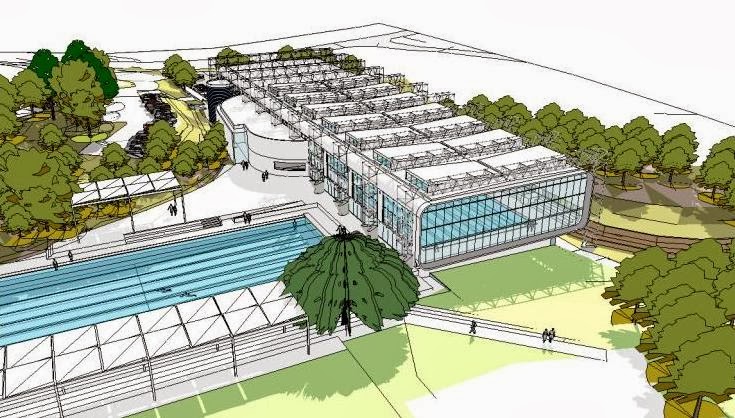
The good news is that Rockdale Council has given the green light for its redevelopment. 

There will be an open day at the pool on Saturday 8 February 2014. You can view the design drawings and speak to the architects and the Council project team. 

The plan is for the centre to have:

  • a new outdoor pool with seating and shade structure The pool will be heated to 26 deg C. The outdoor pool will cater for swimming and water polo and a recorders room for race meetings and school swimming carnivals
  • Indoor leisure pool (children's play pool). This will be heated to 30 deg C and includes a toddlers pool, beach entry, bubble seat and waterslide.
  • Indoor 8 lane 25 metre lap pool heated to 28 deg C
  • Indoor program pool (warm water exercise/learn to swim/hydrotherapy) heated to 31 deg C
  • Children's Club / Creche
  • Community space
  • Gymnasium and fitness area
  • Kiosk
  • Change rooms and amenities
  • administrative rooms
  • Plant room
  • Car parking for about 175 cars
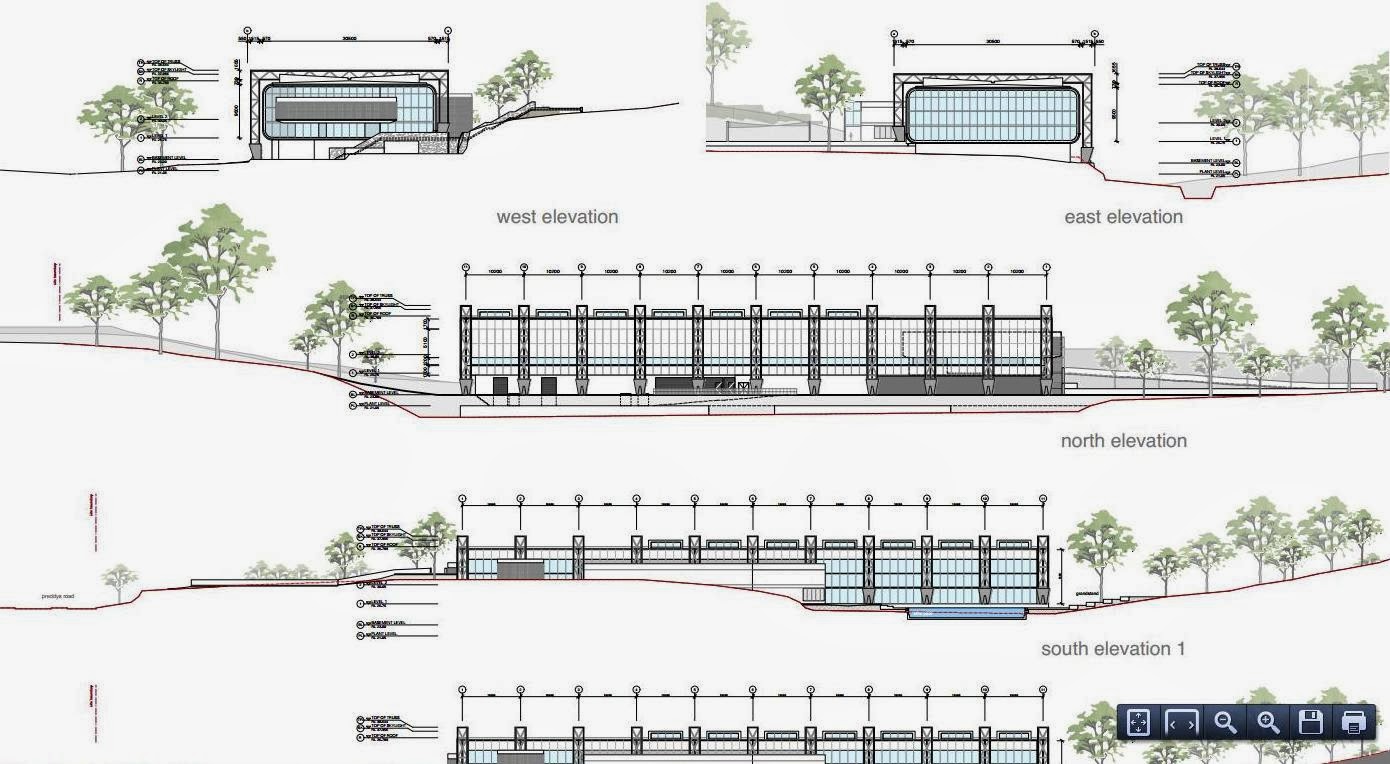
Here's pictures from the Council website showing the latest plans.


Here's previous blogs which provide the back story

25 September 2012: It's a resort! But what about the future?

15 December 2011: Bexley pool update

2 December 2011: Bexley pool proposal for re-development

22 February 2011: The fight to save Bexley pool (article from The Leader)

10 December 2010: Bexley pool battle (article from The Leader)

The Rockdale Council website is worth having a look at for information about the plans and progress.


Saturday, 25 January 2014

McIvers Ladies Baths, Coogee

Of all the magnificent ocean pools in Sydney, this is my favourite. They are located under a cliff, on a rock platform.

The baths have magnificent oceans views and are relatively well screened from the surrounding area. The baths were built in 1886, but according to the National Trust it has been a popular swimming spot for women since before 1876.

The pool site may have been a traditional bathing place for Aboriginal women. 

This pool (entrance donation 20 cents) is popular with nuns, Muslim women, lesbians, and elderly women (well women of all ages, really). In 1995, after court challenge, it was granted an exemption under the Anti-Discrimination Act to continue operating for women, because of its particular importance for diverse groups.

It's relaxed, there is great sunbathing on the grass and rocks, and best of all the pool itself is great to swim in.

I've blogged McIvers before: here on 25 September 2006 and on 25 December 2011.

Now I add pics from 8 January 2012 and 4 April 2013 - contrasting days!

For more about the history of McIvers, see below.

8 January 2012


4 April 2013


From the NSW Ocean Baths site

1860s
This women-only bathing area has been in continuous use since the 1860s.

1876
Randwick Council received complaints about men wilfully lingering near the women's baths, even though these baths were not operated by the Council.

1886
The baths were apparently more formally constructed with women's changing rooms, which made greater usage of the baths possible.

1901
Randwick Council's lease of the baths site expired and the NSW Minister for Lands called tenders for improvements. The Minister believed that the charges required by Council from private operators were too high and he was unwilling to extend the Council lease on the pool. Entry charges to the baths were a penny, with a further penny for hire of a towel and costume. After Council argued that it had spent 300 pounds on improvement to the baths, it gained a 10-year extension of their lease at five pounds per annum.

1912
Mina Wylie trained in this pool before swimming her way to a silver medal in the 1912 Olympics, the first Olympics with swimming events for women.

1918
Robert and Rose McIver began operating the Ladies Baths.

1922
The McIver family had created the baths in their present form.

1923
Rose McIver, Mina Wylie, Bella O'Keefe and members of the Mealing and Wickham families began the Randwick and Coogee Ladies Amateur Swimming Club with Robert McIver as chairman. The Randwick Ladies Amateur Swimming Club formed and took over the lease of the baths. Free swimming lessons have been provided at the pool since the 1920s.

1946
Randwick Council decided to apply to the Minister for Lands to have the bath available to the public for mixed bathing. That decision was overturned after objections from:
- the proprietors of neighbouring Wylies Baths, pointing out the potential damage to business at their mixed bathing pool, and
- the Mother Superior of the Brigidine Convent at Randwick, stating that the nuns at her convent, any country nuns vacationing there and the 100 boarders at the Brigidine School would not be able to visit the baths, if they were opened for mixed bathing.

1947
Randwick Council estimates indicated an expected income of 20 pounds from the women's pool. The Coogee-Randwick Ratepayers Association complained to Council that McIvers Baths were an eyesore and a disgrace to the community and urged they be demolished or put in proper repair. In June, Robert McIver explained to the Council Works Committee that  owing to the bad conditions of steps, he had been unable to open the baths the previous season except to school groups. He also said that he could not carry on any longer under the present conditions.

1972
Council was discussing plans to build a solid fence around the pool 'not only for sensible reasons' but also to deter 'perverts and peek-a boos'.

1977
The women's baths were renovated.

1980s
After vandals burned down the Randwick and Coogee Ladies Amateur Swimming Clubhouse, Randwick City Council agreed to rebuild the clubhouse.
The Randwick and Coogee Ladies Amateur Swimming Clubhouse presented a prize to each youngster who learnt to swim (sometimes after only a two-week period) at its free Saturday morning swimming classes. Boys under seven could learn to swim there, but then had to move on to use other pools.

Continued closure of the women's pool deprived Coogee kids of swimming lessons and made races impossible. The pool was leaking badly and only contained water at high tide. Heavy rocks in the pool needed to be removed and minor repairs undertaken. Council said repairs were delayed until sea and tide conditions permitted them to be carried out in working hours.

1990s
When  Randwick Council's lease from Department of Lands expired,  Council requested a five-year renewal of the lease.

1993
Mrs Doris Hyde of the Randwick and Coogee Ladies Amateur Swimming Club commended the pool's lesbian patrons as 'the nicest girls' and the 'ones who'll put the fellows out'.

1994
The National Trust classified this pool and listed it on its heritage register.
The Randwick and Coogee Ladies Amateur Swimming Club learn-to-swim classes now took boys up to age 12. The club raised funds for cancer research at the Prince of Wales hospital, worked closely with the Coogee surf club and Wylies Baths, as well as the Coogee RSL.

A man complained that he had been sitting on the foreshore near the pool, when several women sunbaking at the pool call him a 'deviant', asked him to leave, and threatened to call the police if he didn't. Mrs Doris Hyde of the Randwick and Coogee Ladies Amateur Swimming Club denied the baths were 'a lesbian lair' and said she had never seen anything untoward there.

After a Coogee man, Leon Wolk, complained to the NSW Anti-Discrimination Board that he was barred from the baths on account of his sex, the Anti-Discrimination Board wrote to Randwick Council seeking information about the baths. Randwick City Council stated there had been no complaints abut the baths and that it was prepared to take legal action to keep McIver's ladies baths free of men. The Randwick and Coogee Ladies Amateur Swimming Club claimed it did not have funds to construct change rooms for both sexes, which made it impractical to admit men, except to cheer on their children at swimming carnivals.

The women's pool was traditionally used by older women, women with disabilities, nuns and others who preferred privacy as well as pregnant women and older people with arthritis who enjoyed the pool's private sunbaking area and didn't want to go to the beach, indulge in mixed bathing, or be bothered by men. Thursday was traditionally married ladies day. Girls schools held water safety classes at the baths, which were popular amongst the Islamic community. The club's free lessons had helped Islamic women and children gain confidence in the water and some Islamic women contended that it was the only place their faith permitted them to swim. The medical profession argued that Coogee's women's baths were the only place where women who had suffered disfiguring operations could comfortably bathe.

Despite claiming it was the only safe sea pool in the area during high tides and rough weather, Leon Wolk lost the case.

1995
The NSW  Minister for Local Government, Mr E. Pickering, granted the baths an exemption to an exemption from the NSW Anti-Discrimination Act.

2000
The pool entry fee was 20 cents. Club members paid 50c as a fundraising measure.

2003
Randwick City Council allocated $85,000 for Stage 1 landscaping at the women's pool, thought to be Australia's only sea pool still reserved solely for use by women and children.

2004
The pool closed while landscaping was carried out.
2006
The pool remains popular with a wide varie
ty of women.

Monday, 20 January 2014

Kiama - Pheasant Point Baths (Kiama Ladies Baths, Kiama Olympic Pool)

This pool is located on the rock platform at Pheasant Point on the north side of Kiama Harbour. It has had ocean baths since the 1870s. 

For more detailed history, read on after the photos. 
31 Jan 2013
31 Jan 2013 8:15am Canon D20
31 Jan 2013 8:16am Canon D20
31 Jan 2013 8:17am Canon D20
31 Jan 2013 8:27am Canon D20
31 Jan 2013 8:32am Canon D20
31 Jan 2013 6:55pm Canon D20
31 Jan 2013 5:24pm Canon D20

History from NSW Ocean Baths site

1875
The NSW Lands Department granted a site for public baths on the north side of Kiama harbour in 1875 for an annual rental of one pound.

1877
A Kiama bathing company opened baths consisting of two rock pools surrounded with a concrete edging at Pheasant Point. The charge of tuppence a bath was supposed to pay the keeper of the baths and maintain the pool. Separate specified bathing hours for males and females, created such  'confusion and ill feeling' among Kiama residents, that the baths were soon designated as solely for use by women and children.

1894
The Kiama Progress Association erected a dressing-shed at the Ladies Baths.

1900
A NSW government grant was sought to improve the Ladies Baths.

1904
Ladies, gentlemen and children attended a swimming carnival for girls at the Ladies Baths.

1905
The Illawarra Steam Navigation Company's handbook touted Kiama's separate commodious saltwater baths for ladies and gentlemen as attractions for visitors.

1908
The Ladies Baths (90 feet by 45 feet) had a concrete bottom, were furnished with a suite of more than 20 dressing-rooms and included a large open reception area. There were children's baths alongside the main pool.

1910
The Ladies Baths were damaged by heavy seas.
Kiama Council moved to draw the trustees' attention to the large number of men hovering in the vicinity of the Ladies Baths, when the ladies were 'indulging in a swim'. After a report that two men had thrown stones down to the Baths from the cliffs when ladies were bathing, the Mayor decided to prosecute persons annoying ladies at the Baths.

1923
Kiama's Blow Hole Point Baths and its Pheasant Point Baths were both well patronised.

1924
The Ladies Baths were invaded by male visitors during holidays. While consideration was being given to creating continental baths for Kiama, Council prohibited mixed bathing until the 'proper sheds' existed. Men kept using the Ladies Baths to teach their children to swim and whenever the men's baths at Kiama's Blow Hole Point were unavailable.

1927
Minor improvements were made to the Ladies Baths.

1930
Segregated bathing at Kiama's Ladies Baths was still attractive to visitors, even though continental bathing had been available at set hours at the Blow Hole Point Baths since 1928.

1934
Construction of Olympic-sized continental baths (mixed bathing) baths at Pheasant Point began as an unemployment relief project, halted when the funds ran out, then resumed with NSW government funding as part of an overall program of town improvement works. Fill from the baths was used to enlarge the playing area on School Flat near the Kiama Infants School. Over the holiday season, the surf club's beach inspectors supervised the incomplete Olympic baths which had been equipped with temporary conveniences and dressing-sheds.

1935
The Olympic Baths (110 yards long and 40 yards wide) had cost over 2,000 pounds in emergency relief work.

1936
Work on the Olympic Baths was at a standstill. Railway Touring Club members patronised the Olympic Baths during their visit to Kiama.

1937
The diving hole at the Olympic Baths was nearly complete.

1938
The concreted part of the divided Olympic Baths already held 400,000 gallons of water. The Olympic Baths were so popular with sunbakers that bike-riding near the Olympic Baths was prohibited to prevent disturbing sunbakers.

1940
Dressing sheds were added to the Olympic Baths, then Kiama's premier swimming venue. The full vision for Kiama's Olympic Baths was never realised.

1958
Kiama's swimming club wearied of the difficulties of staging competitions at the Pheasant Pool Olympic pool. Pumps shifted water 'from the pool at the far end into the pool at the near end' to provide enough water for the annual Kiama District Swimming Club carnival.

Mid-1970s
Kiama Council demolished the walls of the Pheasant Point Ladies Baths.

1980s
Kiama Council filled in one of the Pheasant Point pools.
In 1982, the Kiama Amateur Swimming Club was still swimming at the Olympic pool pending completion of a 25-metre indoor pool under construction in the Terralong Sports Complex. With the opening of Kiama's inland aquatic centre in the 1980s, the Olympic baths ceased to be Kiama's main competition and training venue. Like the Blowhole Baths, the Pheasant Point Baths once more became primarily a recreational facility and social centre.

2004
The pool offers wheelchair access.