Monday, 20 December 2021

Where We Swim: Explorations of nature, travel and family by Ingrid Horrocks


 At its best when talking about family connections and the spaces between us and bonds of love that hold us together. Not "just" a book about swimming. Opens with the author on a solitary journey, and intending to swim alone in various places and keep a Waterlog (like the late author of that wonderful book of that name, Roger Deacon). But it becomes so much more. I like the eclectic swimming places - and even the longing for a swim that cannot happen (in Medellin, Colombia, where someone pooing in the pool at a rented apartment keeps it closed). The "pool" in the Amazon River retreat is simply astounding. 

Horrocks also takes us deep into the global climate crisis and how we react while being middle class privileged folk. I was living in one of the areas of Australia burning in the summer of 2019, sending clouds of smoke across the Tasman. 

It finishes with the impact of Covid lockdown in New Zealand and how people gently connect with strangers when allowed back in the water. 


Wednesday, 1 December 2021

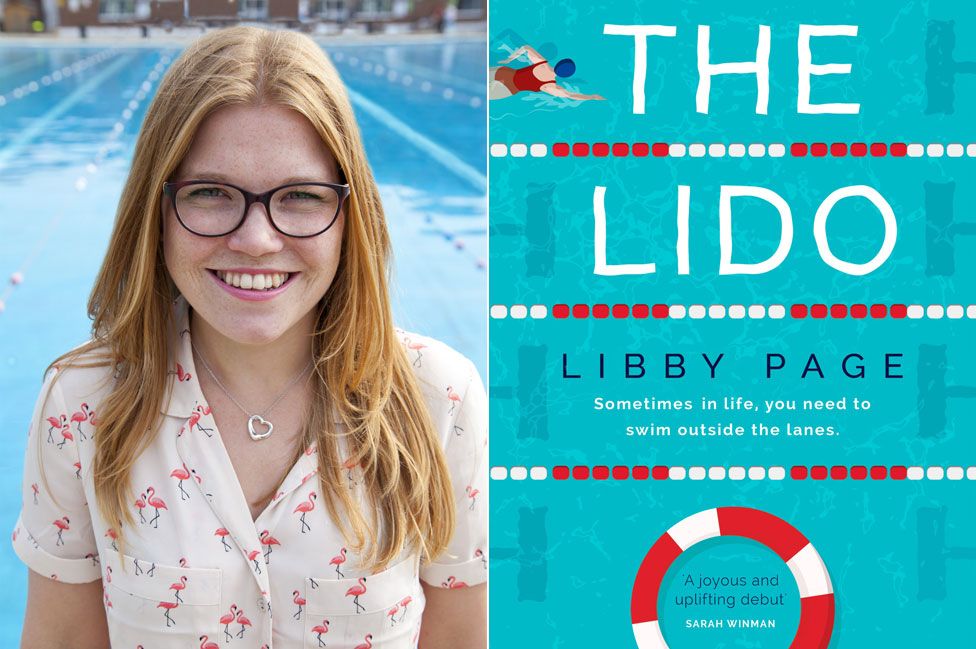
The Lido by Libby Page (Fiction), and some musings about lidos.

Win a copy of The Lido by Libby Page — it's set to make a splash this summer

Books look ahead 2018: What will you be reading this year? - BBC News

In British parlance, a lido (pronounced, weirdly, Lie-do, not as it is from the Italian word lee-do, meaning ), meaning shore, as in the Lido in Venice) is an unheated outdoor swimming pool. They are treasured parts of the communities in which they are located, and have come under increasing threat of closure over the past few decades as local governments seek to cut costs. [Another casualty of bean-counting removal of community facilities have been public libraries - which is also touched upon in this book. 

Libby Page is a journalist, and keen swimmer. This is her debut novel. It tells the story of two women who form an indelible friendship over the fight to save the un-fictitious Brockwell Lido. One is a lacking-in-confidence young journalist named Kate, whose physical appearance seems to be rather akin to that of Kate in the pic above! She is new to the Brixton area of London. She suffers panic attacks. Kate is living a lonely life in a dire share-house where no-one has any contact with anyone else. Kate meets Rosemary, an older woman in her late eighties, recently widowed, who has lived all her life in Brixton, and has  been swimming at the lido for 80 years. The lido played a large part in the love story between Rosemary and her late husband, George. 

I enjoyed the book, especially since I share many of the author's interests - swimming, saving swimming pools, libraries, cooking. 

I especially liked the depiction of the coming together to a diverse community and the tactics they used to save their pool....see my entries on Bexley Swimming Pool (linked below), which we managed to save. Like in the book, we had some great support from the local newspaper. Not QUITE so fortunate at Batemans Bay, where, despite some vigorous campaigning (see link)  we lost the outdoor 50m pool and are acquiring an indoor 25 metre pool....a regressive step in my opinion. 

Bexley pool battle ; 

The fight to save Bexley pool part 2 ;

2011 update ;

Open House Feb 2014 ;

Making submissions to Council ;

Last laps at the old pool ;

After seven years of fighting, a commencement of construction ceremony

Aerial shots of the development ;

We won! Bexley pool reopened

All my posts on Bexley Pool.

One of my favourite passages from the book describes the importance to community of such assets. 

" 'When the old library closed down no one realised the importance of what we were losing until it had gone. It was a place for learning and also a centre of our community. And it's the same with the lid. We all take it for granted and that is why it is so important. We rely on it being there for us. It is somewhere you can go for a moment to yourself, whatever your reason may be for needing that moment....

'The lido holds so many memories for us all. For children who have never been to the seaside it is their summers and their freedom. For parents it is the memory of seeing their child swim for the first time - that moment when you just have to let go and let them fly. And for me, well it is my life."

I do have to admire the cold-water swimmers of the UK. Such water temperatures as those described here, and in At The Pond which I recently read, would see me balk - possibly even in the "warm" months! I guess we are blessed in Australia. 

Another way we are blessed is that municipal pools here are plentiful. Sydney is blessed not only with dozens of 50 metre outdoor pools, but ocean and harbour pools as well. Our pools also most usually have plentiful grassed areas and facilities like barbecues are common. A friend visiting from the UK whom I took to Bexley Pool (pre-redevelopment) declared it "like a resort". Another woman I met swimming there, who migrated from China, said that her family spends thousands of dollars visiting resorts on their holidays, whereas she spends $5 going to the local pool! 

Libby Page's page. Author / Swimmer/ Optimist

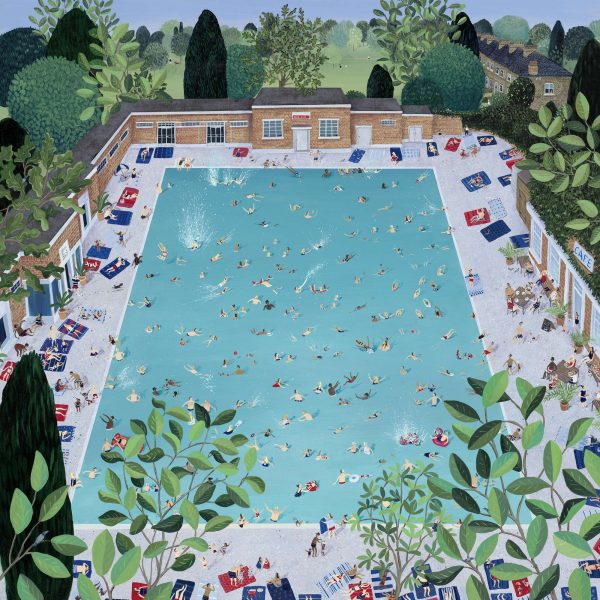
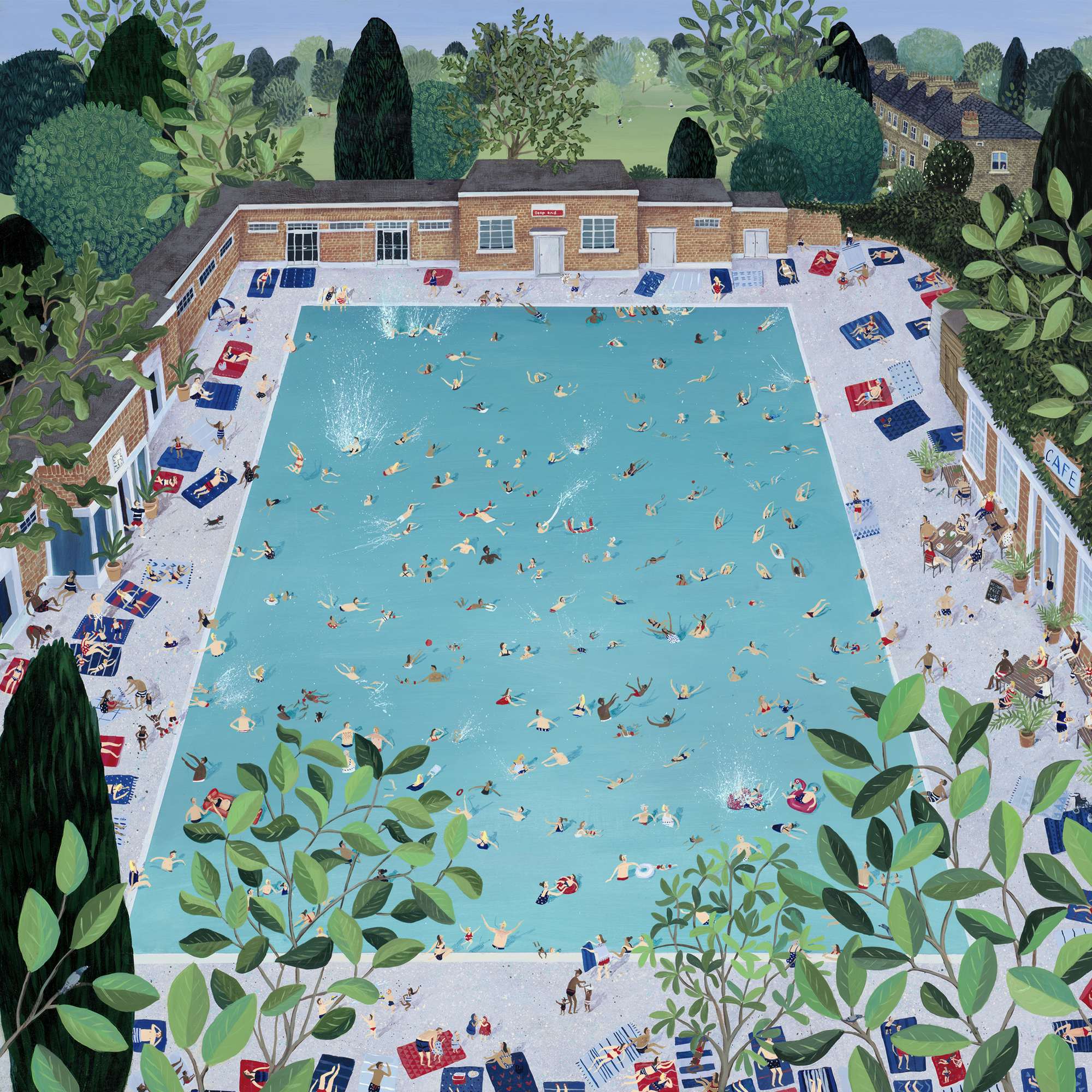
In researching this post, I found this gorgeous art print of Brockwell Lido by Jenni Murphy. You can buy it from this page. 
Read more: 

BLU - Brockwell Lido Users group

A blog about swimming at the Brockwell Lido (Londonist)

Brockwell Swimmers -  a swimming club 


Saturday, 27 November 2021

At the Pond: Swimming at the Hampstead Ladies' Pool (Daunt Books, 2019)

Photo from CultureFly.co.uk 


I found this small volume of 14 essays utterly intriguing. 
Hampstead Heath in London contains three swimming ponds (and others for angling, model-boating etc; created when the Fleet River was damned in the 17th and 18th centuries as reservoirs for water supply to Hampstead and Highgate). The swimming ponds are one for women, one for men and one mixed. 
The writers who contributed include some well-knon, Like Margaret Drabble and Esther Freud, some not so well-known. It is divided into 4 sections, Winter, Spring, Summer, Autumn. Some swim year-round, some are summer-only. 
The Pond as it is known is legendary amongst certain Londoners. It is "wild swimming" in a huge city ... many describe the wildlife and the vegetation...moorhens, ducks, snakes, reeds and grasses etc. The temperature is never what I would call warm, and in winter there can be ice, and of course snow on the ground. There seems to be several hundred hearty souls who do swim year round. However, there also seems to be a sort of reverence, an elitist aura around them. One writer says "they know the lifeguards". 
Also intriguing are some of the "rules" and customs ... eg there can only be a certain ratio of swimmers to lifeguards, so on a hot summer's day you may have to wait to drop in down the metal railing. Imagine trying to impose that at one of Sydney's (un-lifeguarded) ocean pools!) 
Hampstead and Highgate are high-end London suburbs, nowadays often populated by the very wealthy, though they weren't always - they were arty and bohemian in the past. 
I couldn't help comparing the Pond's mores with those at Sydney's McIvers Baths - the Ladies' Pool at Coogee. Some seem similar - the older coterie of "gatekeepers", sticking within your own groups, the basic changerooms, topless sunbaking, but the convivility in the water, and the style of swimming seems a little more open at McIvers. As well, apart from a couple of essayists with southeast Asian heritage, there is know mention of it as a refuge for diverse cultural groups like Muslim women or nuns or others who want to swim in a women-only environment. 
There was a major controversy a couple of years ago, when the London Corporation, which manages the Pond said it was ok for transitioning or transitioned male to female Transgender users to officially use the pool (they had been anyway), with backlash from some. That seems to have settled down now. 
It probably helps to be a swimmer to enjoy the book, but I think it's also interesting in broader cultural terms as a slice of London life.

Here's the page of the Kenwood Ladies Pond Association, a voluntary group of women which cares about the Pond. There's new and info about current campaigns. There is a video called "City Swimmers" in the Gallery.

A story about closure due to sewerage leaks, and a protest against compulsory charges.

Here's some reviews of the book: 

By Natalie Xenos - click here.

By Rebecca Armstrong - click here.

You can easily search for more online. 


Film: Cloro (Italy, 2015)

Chlorine (2015 film) poster.jpg


When seventeen year old  Jenny's mother dies suddenly,  with her father being ill and a nine year old brother to care for, she must move to a mountain village away from the coast, where she is an aspiring synchronised swimmer. She feels isolated and embittered, but is determined to return to the life she longs for, and practices in the pool in the hotel where she works. 


A coming of age film from Italy; directed by Lamberto Sanfelice, starring Sara Serraiocco as Jenny. 

I saw this at the Italian Film Festival in Sydney 10 August 2015. 


Britannia Park, near Warburton, Victoria


Britannia Park in the Yarra Valley, Victoria, is a Girl Guides owned property. I went to some camps there when I was in Brownies, when we lived in Melbourne in the 1960s. Several years later (about 1976) I visited and discovered that they had built a pretty nifty swimming pool. 

I did a search today and found it referred to as "an old swimming pool full of goldfish....not for people to swim in any more."

Wednesday, 24 November 2021

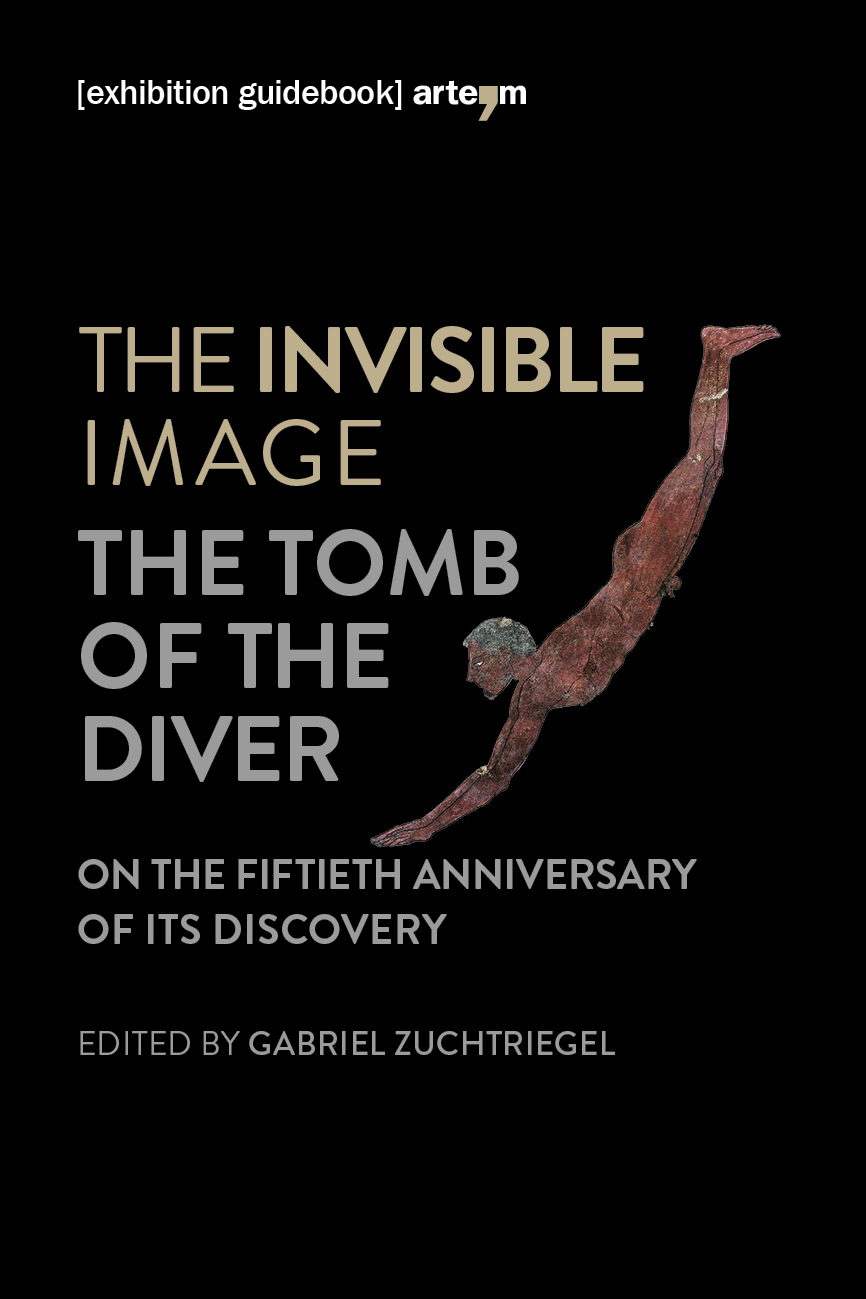
The Invisible Image: The Tomb of the Diver on the fiftieth anniversary of its discovery (Exhibition)

 the invisible image. the tomb of the diver

In 2018, we were fortunate to visit Paestum, in southern Italy, while this exhibition was on. 

The Tomb of the Diver dates back to 470 BCE, when this was part of Magna Graecia, so it is an Ancient Greek creation. The most famous image was found on the underside of the top slab of the tomb. It seemingly depicts as young man diving from a wall or tower into waves. 

The tomb of the diver is on permanent display at the museum; this exhibition told the story of 300 years of archaeological exploration into the mystery of the meaning of this particular depiction - a meaning which remains a mystery. 

It also included the display of ancient and modern works, "designed to illustrate the scientific, cultural, artistic and ideological knowledge which has ensured that, fifty years after the discovery of the tomb, the question of its meaning still remains wide open." 

File:Bathing girls MNE Villa Giulia 106463.jpg
Attic black-figure amphora attributed to the Priam painter 530-500BCE Side A - female bathers. National Archaeological Museum, Villa Giulia, Rome Source: Wikimedia


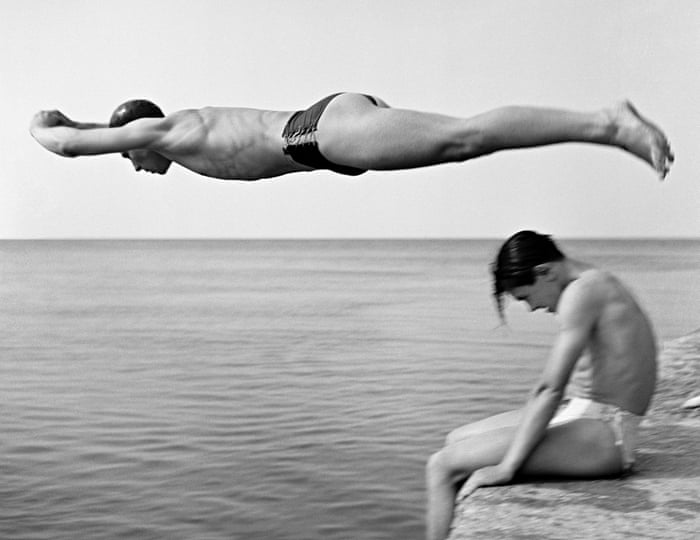
Nino Migliori's best photograph: a gravity-defying Italian diver |  Photography | The Guardian
Nino Migliori The Diver, 1951. Photographic print, made 17 years before the discovery of the Tomb of The Diver
 

Vintage Swimwear: A History of Twentieth Century Fashions by Sarah Kennedy


Vintage Swimwear By Sarah Kennedy


A really interesting book, beautifully illustrated. Traces the history of women's swimwear from the early 20th to early 21st century. As someone who was a teenager in the 1970s, I just had to laugh at the crotchet bikinis! 


The book begins with a timeline.

The chapters are:

  • From Brighton to Biarritz - the era of woollen costumes, bathing machines, and the birth of the swimsuit, from the late Victorian era through to the 1910s. Due respect is paid to Annette Kellerman and the sensation she caused when first appearing in a "unitard".
  • The St Tropez Set -the 1920s - the divergence in American and European styles; the emergence of Jantzen as the company whose slogan was "The suit that changed bathing to swimming."The French fashion houses - eg Chanel - become involved, Cubism and Modern Art influences and the emergence of public swimming pools (Lidos).
  • Star Quality - the 1930s, which brought the fabric revolution which brought the end of the knotted swimsuit; Hollywood and stars in swimsuits, as well as beach and other sporting leisure wear emerge; the emergence of the beauty pageant.
  • The Return of the Hourglass - The war years (which saw the wthdrawal of nylon for parachute-making) Glamorous pin-up stars like Ava Gardner, Esther Williams, the birth of the two-piece suit (fabric saving!) and after the war, the development of more fabrics like Lastex, and the birth of the bikini.
  • The Fabulous Fifties - hourglass figures and idealised body shapes, curvaceous and voluptuousness; swimsuits with lots of structure, glamour girls like Jayne Mansfield and Marilyn Monroe, and 'sexy innocence' eg Sandra Dee. 
  • Far Out Grooves - The 'Swinging Sixties', the California scene, lots of stretch, and Bri-Nylon, the emergence of the crotchet bikini, and the glitz of the 'jet set'.
  • The Beach Babe Revolution - everything was shrinking during the 1970s, the fabrics evolved towards those used today, big curvaceous bodies were out, the suntan essential. Lots of cutouts in swimsuits, disco influences, developments in racing swimsuits.
  • Let's Get Physical - the fitness boom of the 1980s, muscular bodies, bigger breasts, higher cuts to make legs look longer.
  • New Luxe Nineties - ethnic fashion, world music, ostentatious luxury and clean lines  and cruise collections, retro surf styles, and new Australian labels like Jets and Zimmerman, Watersun and Speedo going glam.
  • Post-Millenium Trends - swimsuits that 'slim', designer resortwear, retro and Brazilian styling, celebrity trends


Beaches of Batemans Bay and the Eurobodalla Coast

 Amazon.com: Beaches of Batemans Bay and the Eurobodalla Coast eBook :  Henry, Peter, Henry, Manuela: Kindle Store

A very useful guide to every beach from Durras, in Murramarang National Park in the north, to Wallaga Beach in the south of the shire.It includes street maps of each village and town. Fabulous colour photos and information about flora, fauna, geology of beaches, and much more. 

Published and distributed by Hyams Publishing, Huskisson, 2007.